
Beyond the Blanket: How North India’s Deep Freeze Reveals the Fragile Threads of Modern Life
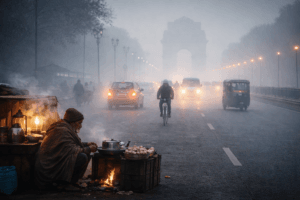
Beyond the Blanket: How North India’s Deep Freeze Reveals the Fragile Threads of Modern Life
A ghostly silence descends upon runways normally throbbing with the roar of engines. From the arterial Ring Road in Delhi to the fertile plains of Punjab, a profound, opaque whiteness has swallowed the landscape. This isn’t a scene from a film; it is the gripping reality for millions in North India as an unrelenting blanket of dense fog, coupled with a severe cold wave, brings one of the world’s busiest aviation hubs to its knees and life to a slow, cautious crawl. The cancellation of at least 129 flights at Delhi’s Indira Gandhi International Airport on Saturday is not merely a statistic—it is the tip of an iceberg of disruption, a stark reminder of nature’s power to pause our hyper-connected world.
The Immediate Crisis: Travel in a State of Suspension
The numbers tell a story of escalating chaos. Following the cancellation of 177 flights on Friday, Saturday’s 129 cancellations and hundreds of delays represent more than logistical headaches; they signify personal upheaval. The “Low Visibility Procedures” enacted by the airport are a complex ballet of precision and patience, where the margin for error shrinks to zero. With visibility often dropping below 50 meters—less than the length of an Olympic swimming pool—pilots rely solely on Instrument Landing Systems (ILS), and take-offs become a game of dangerous chance.
Airlines like Air India and IndiGo have issued advisories, urging patience, but this patience wears thin in crowded terminals where stranded passengers, wrapped in shawls and anxiety, face uncertainty. This disruption ripples outward, affecting international connections, cargo shipments, and the tourism-dependent economy during a key holiday period. The fog, in its eerie quiet, exposes the fragility of our just-in-time lives, where schedules built months in advance dissolve in the morning mist.
The Human Dimension: Life in the Slow Lane
Beyond the airports, the impact is deeply personal and pervasive. In cities like Noida, Chandigarh, and Ludhiana, the morning commute transforms into a tense, high-stakes endeavor. Headlights are useless against the thick curtain of fog; the world narrows to a few feet of taillights ahead. Road accidents spike, and daily routines are upended. For street vendors, auto-rickshaw drivers, and daily wage laborers, this weather isn’t an inconvenience—it’s a direct threat to livelihood. The cold wave intensifies this hardship: Hoshiarpur shivering at 4.8°C, Pulwama in Kashmir at a biting -4°C.
This is also a public health crisis. The confluence of dense fog and pollutants creates a toxic smog, exacerbating respiratory illnesses. The “orange alert” issued by the IMD for Delhi and parts of Jharkhand is a warning to be prepared not just for travel woes, but for strained healthcare systems. The vulnerable—the elderly, the homeless, and those without adequate shelter—face the brunt of what is being recorded as the coldest December day in the capital so far this year.
The Science of the Shroud: Why This Happens
To understand this phenomenon is to look at a perfect, albeit inconvenient, atmospheric recipe. The key ingredients are:
- Clear Skies and Calm Winds: Following the passage of a western disturbance, skies clear, allowing heat to escape rapidly into the atmosphere (radiational cooling).
- Ample Moisture: Residual moisture in the air from previous weather systems or irrigation in the Indo-Gangetic plains (like the “yellow warning” for fog near the Bhakra Dam reservoir) provides the water vapor.
- Low Wind Speed: Calm conditions prevent the dispersal of this cooled, saturated air.
- Temperature Inversion: A layer of warm air acts like a lid, trapping the cold, dense, fog-laden air close to the surface. This inversion also traps pollutants, often marrying fog with smog into a persistent, hazardous mix.
The IMD’s prediction of “dense to very dense fog” and the “orange alert” are based on these conditions persisting. Furthermore, the forecast of a new, weak western disturbance affecting the Himalayas from December 25 hints at a potential pattern shift—possibly bringing light rain or snow to the hills but also prolonging the moisture feed for the plains.
Regional Ripples: A Subcontinent in the Grip of Winter
The disruption is panoramic. In Punjab and Haryana, life moves to the slow rhythm dictated by near-zero visibility. In Rajasthan, places like Fatehpur and Sikar see temperatures plunge to around 5°C, with dense fog predicted to shift westward. Jammu & Kashmir braces for its harshest phase, the ‘Chillai-Kalan’, with temperatures already sub-zero and forecasts of moderate snowfall. The IMD’s orange alert for very dense fog in Jharkhand districts like Palamu and Hazaribagh shows this isn’t just a Northwestern phenomenon; it’s a belt of disruption.
Navigating the Whiteout: Insight for the Affected
For travelers and residents, navigating this requires a shift from frustration to strategic adaptation:
- For Air Travel: Proactively check flight status via airline websites or apps before heading to the airport. Consider travel insurance that covers weather disruptions. If stranded, know your rights regarding accommodations and rescheduling.
- On the Roads: Use fog lights (not high beams) and maintain a severe reduction in speed. Keep a greater following distance than you think is necessary. If visibility becomes dangerously low, safely pull over and wait.
- For Health: Limit early morning and late evening outdoor exposure. Use N95 or N99 masks to filter pollutants. Stay layered to combat the cold wave, and ensure vulnerable community members have access to warmth.
A Broader Lens: Climate, Infrastructure, and Resilience
This annual ordeal forces critical questions about long-term resilience. While fog is a natural meteorological event, its impact is magnified by human factors. The pressing need for advanced CAT III-B ILS systems at more runways across Indian airports is clear—this technology allows landings with visibility as low as 50 meters. Investment in all-weather rail and road infrastructure, like clearer lane markings and reflective signages, can reduce terrestrial accidents.
On a macro level, these severe cold waves and persistent fog patterns invite scrutiny within the broader context of climate variability. Are winter precipitation patterns changing? Is pollution exacerbating the density and duration of fog? These are not just academic questions but ones vital for urban planning, agricultural scheduling, and public health preparedness.
Conclusion: The Revealing Quiet
The dense fog over North India does more than obscure vision; it reveals. It reveals the tension between human ambition and natural forces, the thin line between global connectivity and regional paralysis, and the profound social inequality in facing a climatic event. As the sun struggles to pierce the gloom, and passengers wait hopefully for announcements, this weather event is a pause button—a moment to reflect on building systems that are not just efficient, but robust, empathetic, and ultimately, humbly adapted to the rhythms of the natural world. The cold wave will pass, and the fog will lift, but the lessons it imparts must not be allowed to dissipate so easily.
You must be logged in to post a comment.