
Beyond the Blanket: Delhi’s Toxic Smog and the Human Cost of a Recurring Nightmare
On December 24, 2025, North India, particularly Delhi, woke to a severe public health and logistical crisis as a toxic blend of dense fog and trapped pollutants—recorded at an AQI of 349 (‘very poor’)—engulfed the region. This hazardous smog, a result of winter temperature inversion locking in emissions from vehicles, industry, and seasonal farm fires, reduced visibility to 100 metres, causing massive flight and train disruptions. Beyond the immediate chaos, the recurring episode underscores a silent, long-term catastrophe, damaging respiratory and cardiovascular health for millions while highlighting the urgent need for systemic, regional solutions that move beyond temporary measures to address the root causes of energy, transportation, and agricultural pollution.
Beyond the Blanket: Delhi’s Toxic Smog and the Human Cost of a Recurring Nightmare
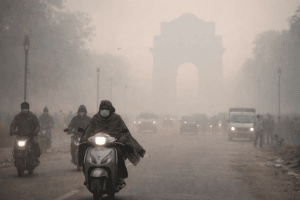
A dense, greyish-white shroud doesn’t just descend on Delhi; it seeps in. One evening, the horizon softens. By dawn, the world has collapsed into a claustrophobic radius of a few hundred metres. This is not the picturesque, frost-kissed fog of postcards. This is a gritty, acrid smog—a palpable mixture of cold winter fog and toxic pollutants that marks the city’s dreaded annual tryst with a public health emergency. As December 24, 2025, dawned, Delhiites once again woke to this familiar adversary, with an Air Quality Index (AQI) of 349—firmly in the ‘very poor’ category—and visibility plunging to a mere 100 metres, turning the city into a ghostly tableau.
The Morning After: A City Grinding to a Halt
The immediate impacts are chaotic, yet grimly routine. At the Indira Gandhi International Airport, the ripple effect is stark: over 270 flights delayed, at least 10 cancelled. The airport’s advisory echoes through countless phones, a sterile script against a backdrop of traveller anxiety. On the ground, commuters in Vinod Nagar and elsewhere navigate not just traffic, but a viscous, grey atmosphere, headlights barely piercing the gloom. At the New Delhi railway station, a different kind of weary patience settles in as train delays stack up, stranding thousands.
Even the solemnity of tradition is framed by this crisis. As Republic Day parade rehearsals proceed at India Gate and along Kartavya Path, the silhouettes of the Indian Navy contingent materialize not through dawn’s light, but through a toxic smog. The AQI here ticks to 354, a number that underscores the contradiction of celebrating national resilience while breathing air that systematically undermines it.
Not an Isolated Incident: A Regional Pattern of Distress
Delhi’s plight is merely the most visible node in a broader pattern of North India weather distress. The India Meteorological Department (IMD) has its colour-coded alerts stretched across the map:
- Ayodhya and Kanpur wake under a dense fog, with yellow alerts and temperatures hovering around 10-11°C.
- Moradabad faces an orange alert, a step more severe, indicating heightened risk and more intense conditions.
This is a cold wave intensified, where the meteorological phenomenon of fog becomes a dangerous vehicle for pollutants, creating a smog that blankets life across the Indo-Gangetic plains.
The Anatomy of an Annual Crisis: More Than Just Winter Fog
To call this merely “fog” is a dangerous misdiagnosis. What North India experiences is a temperature inversion. Normally, air cools as it rises, allowing warmer, pollutant-laden air to disperse. In winter, a layer of warm air acts like a lid, trapping cold air—and all the pollutants within it—close to the ground. This lid condenses with moisture to form fog, creating the perfect smog scenario.
The pollutants themselves are a year-round recipe, spiked by seasonal ingredients:
- Perennial Sources: Vehicle emissions (a staggering fleet with significant diesel contributions), dust from construction sites, and industrial pollution form the baseline.
- The Winter Spike: The crucial, controversial addition is stubble burning in the neighbouring states of Punjab and Haryana. While its exact contribution is debated, the timing of its smoke plume with the onset of inversion conditions acts as a potent trigger.
- Localised Fuel Use: As temperatures drop, the use of cheap, polluting fuels for heating in informal settlements adds a hyper-localised layer of toxins.
The Central Pollution Control Board (CPCB) and state governments enact the Graded Response Action Plan (GRAP), but these measures—odd-even schemes, construction bans, truck entry restrictions—often feel like applying bandaids during a major surgery. They mitigate the peak but fail to address the systemic pathology.
The Unseen Toll: A Silent Public Health Catastrophe
While flight delays make headlines, the true crisis unfolds silently in lungs and hearts. An AQI of 349, labelled ‘very poor’, translates to real-world harm:
- Immediate Effects: Irritation of eyes, nose, and throat, aggravated asthma, heightened risk of respiratory infections.
- Long-Term Damage: Prolonged exposure to PM2.5 (fine particulate matter that invades the bloodstream) is linked to decreased lung function, the development of chronic bronchitis, aggravated heart conditions, and increased mortality. For the vulnerable—children, the elderly, those with pre-existing conditions—each smog episode is a direct assault on their long-term health.
Hospitals report surges in patients with respiratory distress. Life for millions becomes a calculation: Is today’s outdoor commute or exercise worth the potential damage? The psychological burden of being trapped in toxic air, the anxiety for children’s health, is an immense but unquantified cost.
Pathways Through the Haze: Beyond Short-Term Fixes
Addressing this requires moving beyond crisis management to systemic transformation:
- Energy Transition at the Grassroots: The real victory lies in making clean heating affordable and accessible. Subsidised distribution of electric heaters and improved insulation for low-income housing can eliminate the need for biomass burning within the city.
- Reimagining Mobility: Accelerating the shift to electric public transport—buses, metro expansions, and supporting infrastructure for e-rickshaws—is non-negotiable. This must be coupled with making non-motorised transport (walking, cycling) a safe and viable option through dedicated, shaded pathways.
- A Farm-to-Fuel Strategy: Farmers need a viable, profitable alternative to stubble burning. This requires scaling up machinery for in-situ management (like Happy Seeders) and creating robust, year-round supply chains for ex-situ solutions, converting agricultural residue into bio-CNG, compost, or ethanol. This turns a waste problem into an income source.
- Green Infrastructure as a Right: Delhi needs a dense network of urban forests, vertical gardens, and air-purifying green walls, especially along major traffic corridors. These are not cosmetic but functional public health infrastructure.
- Regional Solidarity, Not Blame Game: The airshed of the Indo-Gangetic plain is one. A effective, empowered regional management body with the authority to coordinate policy across state borders is essential. Pollution is no respecter of political boundaries.
A Call for Clear Skies
As rehearsals for Republic Day continue in the smog, the symbolism is potent. The true test of national strength and resolve may not be in the parade’s precision, but in the ability of its leaders and citizens to secure the most fundamental right: the right to breathe clean air.
Delhi’s December 24, 2025 smog episode is not a news update to be scrolled past. It is the latest chapter in a worsening chronicle. It underscores that the fight for breathable air is a fight for public health, economic stability, and social justice. The solution lies not in waiting for the wind, but in building a city—and a region—that is no longer manufacturing its own poison. The fog will eventually lift with the changing season, but the political and societal will to prevent its toxic return must become a permanent, unshakable force.
You must be logged in to post a comment.