
Beyond Lab Space: How Jubilant Biosys’s New Noida Facility Captures a Shifting Pharma Landscape
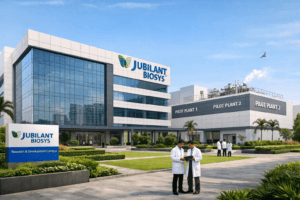
Jubilant Biosys’s new Noida facility, announced at the 2026 JP Morgan Healthcare Conference, represents far more than a simple capacity expansion; it is a strategic response to the evolving demands of the modern pharmaceutical landscape. By deliberately co-locating discovery labs with pilot plants capable of producing up to 25kg batches, the company is engineering a seamless, integrated pathway designed to de-risk and accelerate early-stage drug development for its biotech and virtual pharma clients.
This move, which will increase its scientific workforce to 1,300, capitalizes on improving funding conditions and a growing preference for fee-for-service partnerships that offer scientific expertise and operational continuity. It reflects a broader industry trend where leading CRDMOs and CDMOs are competing on sophisticated, end-to-end solutions—from Bora Pharmaceuticals’ commercial-scale expansions to Piramal’s sterile injectables investment—signaling a definitive shift from transactional outsourcing to deep, strategic collaborations that compress timelines and share the inherent risks of innovation.
Beyond Lab Space: How Jubilant Biosys’s New Noida Facility Captures a Shifting Pharma Landscape
The announcement from the JP Morgan Healthcare Conference in San Francisco this week was, on its surface, a familiar industry story: a contract research, development, and manufacturing organization (CRDMO) is expanding its physical footprint. Jubilant Biosys, a subsidiary of Jubilant Pharmova, revealed a new discovery and preclinical facility in Noida, India, promising to double its chemistry capacity. Yet, to view this news merely as an addition of square footage and reactors is to miss its profound significance. This expansion is a strategic chess move, reflecting and accelerating a fundamental transformation in how drugs are invented and brought to market—a shift from transactional outsourcing to deeply integrated, risk-sharing partnerships.
The Integrated Engine: From Milligram to Kilogram Under One Roof
The core promise of the new Noida facility is seamless integration. By co-locating discovery labs with two pilot plant blocks capable of handling batches from hundreds of grams up to 25kg, Jubilant is systematically dismantling a traditional bottleneck in drug development. Historically, the journey from a promising molecule in a discovery lab to a candidate ready for Investigational New Drug (IND) application involves treacherous handoffs. Process chemistry, scale-up, and analytical method development often occur in siloed departments or even at different companies, leading to delays, communication gaps, and costly rework.
Jubilant’s design—featuring a state-of-the-art R&D space with 15 reactors (20L to 250L) and capabilities for comprehensive route scouting, optimization, and polymorph screening—aims to make this process fluid. As CEO Giuliano Perfetti stated, this allows for “faster discovery delivery and integrated scale-up, with projects seamlessly transferred to our GMP facilities.” This is not just about speed; it’s about de-risking the entire early-phase pipeline for their clients, predominantly innovative biotechs and virtual pharma companies. When the same team, or at least the same organizational culture and quality systems, shepherds a molecule from its inception through early scale-up, the continuity reduces uncertainty—a commodity more valuable than gold for cash-conscious innovators.
Meeting the Moment: Fee-for-Service and the Resurgent Biotech Ecosystem
Perfetti’s comment about growing “well above the wider market, by expanding our FFS [fee-for-service] offerings” is a direct read of the current economic climate. After a period of constrained funding in 2023-2024, the biotech sector is showing signs of measured recovery. Companies that survived the downturn are now cautiously advancing pipelines but remain intensely capital-efficient. They don’t want to build massive internal infrastructure; they want flexible, expert partners who can act as an extension of their own teams.
Jubilant’s expansion is a bet on this demand surge. By doubling down on integrated early-phase services, they position themselves as the ideal partner for a sponsor looking to take a molecule from concept to IND-ready material without the managerial overhead of coordinating multiple vendors. The increase of their scientific workforce to 1,300 underscores that this model is as much about brainpower and talent density as it is about hardware. In the competitive CRDMO landscape, the ability to offer deep scientific expertise alongside manufacturing agility is a key differentiator.
A Broader Trend: The CDMO Arms Race for Capability, Not Just Capacity
Jubilant’s move is far from an isolated event. It is part of a concerted global push by leading CDMOs/CRDMOs to offer more sophisticated, end-to-end solutions. The examples cited in the broader industry news—from Bora Pharmaceuticals’ expansion in Minnesota to Piramal Pharma Solutions’ new sterile injectables facility in Kentucky—tell a similar story: it’s no longer enough to just offer spare vats or vial-filling lines.
- Bora’s dedication of 100,000 sq. ft. of shell space for high-volume production speaks to the demand for scalable commercial manufacturing, often for products that have successfully navigated the early phases Jubilant specializes in.
- Piramal’s $90 million investment in sterile fill/finish addresses the acute and complex need for advanced parenteral manufacturing, a high-value niche.
- SK pharmteco’s parallel investments in peptide synthesis in California and a massive $260 million small-molecule/peptide facility in South Korea highlight the race to dominate specific, technologically demanding modalities.
Together, these expansions paint a picture of an industry segment consolidating its role as the strategic backbone of modern pharma. They are building interconnected ecosystems where a client can, in theory, partner with a single organization from discovery through commercial launch across multiple drug modalities.
The Strategic Implications: Partnership Over Procurement
The ultimate insight from Jubilant Biosys’s announcement is the continued evolution of the sponsor-CRDMO relationship. The transaction is moving beyond a simple “procurement of services” model to a true innovation partnership. When a CRDMO invests in integrated discovery-to-pilot-scale infrastructure, it signals a commitment to share the technical and timeline risk of development. It aligns their success with the client’s success.
For sponsors, this means choosing a partner is one of the most critical strategic decisions they will make. The criteria shift from “cost per gram” to questions of scientific collaboration, transparency, and systemic efficiency: Can your discovery chemists talk directly to my process engineers? How will we manage knowledge transfer? Can you guarantee a pathway from this lab-scale synthesis to a viable commercial process?
Jubilant’s new Noida facility is a physical manifestation of “yes” to those questions. It is a bet that the future of pharma R&D belongs to agile, scientifically robust organizations that can compress timelines and compress risk through integration. As funding conditions improve and pipelines refill, the CRDMOs that have built these seamless scientific engines—not just expanded their factory floors—will be the ones driving the next wave of therapies from brilliant idea to tangible patient benefit. The expansion in India, therefore, is more than a local business story; it is a marker on the global roadmap of pharmaceutical innovation, highlighting the route where collaboration, capability, and scale converge.
You must be logged in to post a comment.