
Beyond Hashtags & Hustle: How India’s Gen Z is Redefining Patriotism and Powering Nation-Building
Prime Minister Narendra Modi’s amplification of Union Minister G. Kishan Reddy’s article highlights a significant shift in how India’s Gen Z is engaging with nation-building, transforming from passive observers into active, pragmatic participants. This digitally-native generation is leveraging its unique blend of global awareness and local rootedness to infuse government campaigns like Swachh Bharat, Har Ghar Tiranga, Meri Maati Mera Desh, and Nasha Mukt Bharat with genuine innovation and peer-to-peer influence. Their participation, characterized by a focus on tangible action, digital mobilization, and community-centric solutions, signals a move toward a more collaborative and impact-oriented form of patriotism. This synergy between national initiatives and youth energy is creating a powerful force for civic change, though its sustainability relies on institutionalizing this partnership and recognizing Gen Z’s demand for transparency and holistic progress beyond traditional campaigns.
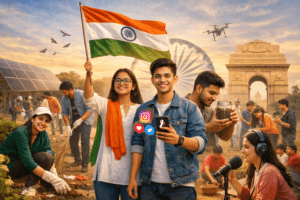
Beyond Hashtags & Hustle: How India’s Gen Z is Redefining Patriotism and Powering Nation-Building
When the Prime Minister of the world’s largest democracy personally amplifies an article about its youngest generation, it’s more than a routine social media share—it’s a signal. Prime Minister Narendra Modi’s recent endorsement of Union Minister G. Kishan Reddy’s piece on Gen Z’s role in nation-building transcends political messaging. It spotlights a profound, observable shift: India’s youth are no longer just the future; they are active, demanding architects of the present, channeling their digital-native savvy and pragmatic idealism into tangible civic action.
For decades, youth mobilisation in India was often framed around sporadic protests or campus politics. Today, as Reddy’s article—and Modi’s amplification of it—highlights, the paradigm has changed. The focus is on sustained, constructive, and collaborative participation in national missions. This isn’t a top-down directive being passively received; it’s a generation aligning its intrinsic values with national goals, creating a potent synergy for change.
Who is India’s Gen Z? Beyond the Demographic
Before understanding their impact, we must move past stereotypes. India’s Gen Z (born mid-1990s to early 2010s) is a cohort of over 370 million. They are:
- Digitally Native, Not Digitally Naive: They haven’t adapted to the internet; they’ve evolved with it. This makes them adept at leveraging social platforms for mobilisation, awareness, and holding power accountable.
- Pragmatic Idealists: Witnessing economic shifts, global uncertainties, and climate crises firsthand, they value actionable solutions over abstract ideology. Their patriotism is expressed not just in sentiment, but in service.
- The “Glocal” Generation: They are comfortably global in their outlook—consuming international content, understanding global trends—yet fiercely rooted in local culture, language, and community identity. The “Vocal for Local” ethos resonates deeply with them.
Decoding the Campaigns: Where Energy Meets Execution
Minister Reddy specifically commended youth involvement in key government campaigns. Let’s dissect what makes these initiatives resonate with Gen Z:
- Swachh Bharat (Clean India): More Than a Clean-UpFor Gen Z, environmental consciousness is non-negotiable. Swachh Bharat offered a structured, collective outlet for this ethic. But they didn’t just join cleanliness drives; they documented them. They used Instagram and TikTok (now reels/shorts) to create before-and-after narratives, shaming littering spots and celebrating transformed spaces. They turned a government campaign into a social media challenge with real-world impact, blending civic duty with digital creativity.
- Har Ghar Tiranga (A Flag in Every Home): Identity, Not ImpositionThis campaign could have been seen as symbolic. Instead, Gen Z infused it with personal meaning. They didn’t just hoist flags; they researched the history of the tricolour, shared stories of freedom fighters on social stories, and created digital art. They used the hashtag to express personal interpretations of patriotism—from LGBTQ+ youth affirming their place in the nation to athletes linking the flag to their Olympic dreams. It became a participatory exercise in national identity-building.
- Meri Maati Mera Desh (My Soil, My Country): Connecting Legacy to LandThis campaign, honoring martyrs, taps into Gen Z’s search for authentic connection and historical context. Their participation goes beyond ceremonies. They are using digital tools to map local war memorials, create online archives of unsung heroes from their districts, and organise “soil collection” drives as community events. It represents a hands-on, granular way to engage with history and sacrifice, making it personal and palpable.
- Nasha Mukt Bharat (Drug-Free India): Peer-to-Peer PreventionHere, Gen Z’s influence is perhaps most powerful. Preachy, top-down anti-drug messages often fail. Gen Z, understanding peer pressure and mental health struggles intimately, has become a force for grassroots advocacy. They create relatable content—memes, podcasts, influencer talks—that addresses the root causes of substance abuse: stress, anxiety, social isolation. They champion rehabilitation over stigma, turning the campaign into one about community wellness and support.
The Underlying Drivers: Why Now, and Why This Way?
This mass mobilization isn’t accidental. Several converging factors explain it:
- The Digital Public Infrastructure: Platforms like UMANG app, MyGov, and DigiLocker have lowered the barrier to civic participation. A youth in a small town can volunteer, give feedback, or access schemes as easily as ordering food online.
- The Startup and Self-Reliance Narrative: The “can-do” spirit of India’s startup ecosystem has bled into the civic sphere. Gen Z sees nation-building as the ultimate startup—a complex, large-scale problem-solving exercise where they can ideate, iterate, and implement.
- A Redefined Social Currency: For this generation, social capital is increasingly earned through demonstrated impact. A profile showcasing participation in a cleanliness drive or a social project carries a new kind of weight.
A Balanced View: Navigating Between Celebration and Critical Engagement
While this synergy is powerful, a genuine insight must acknowledge the complete picture. Gen Z’s engagement is dynamic, not dogmatic. Their participation is conditional on transparency, tangible outcomes, and alignment with their core values—sustainability, inclusivity, and economic opportunity. They are collaborators, not a monolith to be commanded. Their digital prowess also makes them formidable questioners, quick to call out inefficiency or greenwashing even within campaigns they support.
Furthermore, their nation-building vision is holistic. It extends beyond sanctioned campaigns to areas like climate action (where they are demanding faster transitions), mental health advocacy, and LGBTQ+ rights—pushing the boundaries of traditional discourse.
The Road Ahead: Sustaining the Synergy
Prime Minister Modi’s share is a recognition of this potent force. The challenge for policymakers is to move beyond channeling this energy for specific campaigns and towards institutionalizing youth partnership. This means:
- Creating more formal advisory roles for youth in policy design, especially in education, tech, and climate.
- Ensuring campaigns provide not just participation, but pathways to leadership and skill development.
- Fostering spaces for constructive criticism and dialogue, acknowledging that this generation’s way of building may involve disruptive questioning.
In Conclusion
The story here is not merely that the Prime Minister shared an article. It is that India’s Gen Z has decisively moved from the sidelines to the frontlines of civic action. They are building the nation not through rhetoric, but through responsible waste management, through curated digital patriotism, through peer-led wellness advocacy, and through a deeply personal connection to soil and sacrifice. They are proving that in today’s India, nation-building is not a periodic duty; it is a lifestyle, seamlessly integrated into the digital and social fabric of everyday life. This isn’t a waiting generation; it’s a building generation, and the nation’s trajectory is being reshaped in real-time by their swipe, click, and committed step.
You must be logged in to post a comment.