
Beyond Borders: How Hind Rectifiers’ New Global Growth Officer Signals a Strategic Pivot in Industrial Electronics
Hind Rectifiers’ appointment of Chidambaram Balakrishnan as its first Chief Global Growth Officer marks a strategic inflection point, signaling the company’s intent to pivot from a domestic Indian power electronics player to a globally competitive industrial supplier. With over 30 years of leadership at Caterpillar Rail and GE Transportation, Balakrishnan brings the rare ability to bridge the engineering rigor of Western OEMs with the policy and partnership dynamics of emerging markets—a skill set critical as the company seeks to diversify beyond its Indian Railways stronghold into high-growth sectors like defense, renewable energy, and global rail infrastructure. Paired with the concurrent hire of a Global CEO, this move reflects a deliberate two-pronged strategy to separate operational execution from market expansion, positioning Hind Rectifiers to capitalize on “China Plus One” supply chain shifts while building the trust and partnerships necessary to compete on reliability, not just cost, in international industrial markets.
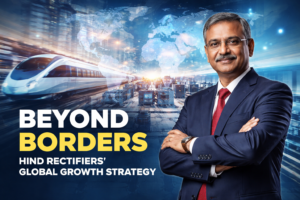
Beyond Borders: How Hind Rectifiers’ New Global Growth Officer Signals a Strategic Pivot in Industrial Electronics
In the intricate world of industrial electronics—a sector defined by long sales cycles, stringent safety certifications, and deeply entrenched supplier relationships—leadership changes rarely make headlines outside of trade journals. Yet, when a company with a five-decade legacy in power electronics appoints its first-ever Chief Global Growth Officer, it signals something far more significant than a routine C-suite shuffle.
Hind Rectifiers Ltd, a stalwart in the Indian power electronics and railway equipment landscape, recently announced the appointment of Chidambaram Balakrishnan as its Chief Global Growth Officer. On paper, it is a story of a veteran executive joining a manufacturing firm. In reality, it is a strategic declaration: the company is no longer content being a dominant player in the domestic market; it is ready to rewrite its identity on the international stage.
To understand the weight of this move, one must look beyond the press release and examine the confluence of global industrial trends, the specific DNA of the executive in question, and the quiet transformation happening within a company best known for its rectifiers and railway electronics.
The Architect of Scale: Understanding the New Appointment
For most organizations, a “Chief Growth Officer” is a title often associated with consumer tech or SaaS startups. In the heavy-industrial sector—where Hind Rectifiers operates—such a title is a rarity. It implies a shift from a purely operational or sales-driven mindset to a strategic, portfolio-based approach to expansion.
Balakrishnan is not a conventional hire. With over 30 years in the industry, his resume reads less like a traditional corporate ladder and more like a blueprint for how to navigate the complex intersection of American industrial giants and Indian infrastructure growth. His tenure as Managing Director at Caterpillar Rail and Regional Director for South Asia at GE Transportation places him in an elite category of executives who have managed P&Ls across the most demanding regulatory and safety environments in the world.
What makes this appointment particularly insightful is Balakrishnan’s dual fluency. He understands the rigorous engineering standards required by Western original equipment manufacturers (OEMs)—standards that often serve as barriers to entry for Indian manufacturers. Simultaneously, through his chairmanships at the Confederation of Indian Industry (Railway Division) and the American Chamber of Commerce in India (Infrastructure Division), he possesses a nuanced understanding of policy, public-private partnerships, and the geopolitical nuances of infrastructure spending.
In a conversation about industrial leadership, it is often noted that the gap between being a “domestic supplier” and a “global partner” is not merely about price competitiveness; it is about the ability to manage risk, ensure supply chain resilience, and navigate cross-border compliance. Balakrishnan’s career has been defined by bridging that gap.
The Strategic Imperative: Why Now?
Hind Rectifiers is not a company in distress seeking a savior; it is a company at an inflection point. Historically, the firm has been synonymous with power electronics for the Indian Railways—a robust but insular market. However, the global industrial landscape is currently undergoing a tectonic shift.
The “China Plus One” strategy adopted by Western multinationals is creating a vacuum in the supply chain for high-reliability electronic components. Simultaneously, the global push for railway modernization—from high-speed rail in Southeast Asia to rail infrastructure renewal in Europe and North America—is creating demand for sophisticated power electronics that Hind Rectifiers has been perfecting for decades.
By creating the role of Chief Global Growth Officer, Hind Rectifiers is acknowledging a hard truth: organic growth within India, while stable, has a ceiling. To achieve the valuation multiples and scale that modern industrial firms require, they must capture margin-rich export markets. This requires a dedicated focus—something that cannot be merely a side project for a Managing Director focused on domestic operations.
Balakrishnan’s mandate—expanding global presence, strengthening partnerships, and exploring new business opportunities—is deliberately broad. In industrial sectors, “partnerships” often mean joint ventures or technology licensing agreements with global majors. “New business opportunities” likely refer to moving beyond the company’s traditional railway stronghold into adjacent sectors like defense electronics, renewable energy grid components, and urban infrastructure.
The Human Element: What Experience Really Brings to the Table
In high-quality business analysis, there is a tendency to focus on numbers and market size. However, in the industrial electronics sector, the “human insight” is often the differentiating factor. Balakrishnan’s experience at GE and Caterpillar brings something intangible but critical: the trust of the global buyer.
When a European rail operator or a North American industrial conglomerate evaluates a supplier in India, they are not just evaluating the product’s technical specifications. They are evaluating the supplier’s ability to deliver consistently during geopolitical crises, to manage intellectual property rights with integrity, and to understand the nuances of just-in-time inventory across time zones.
Having held the top position at Caterpillar Rail, Balakrishnan understands the “voice of the customer” from the perspective of a global Tier 1 supplier. He knows precisely what it takes for Hind Rectifiers to transition from being a subcontractor to a direct supplier to global OEMs. This is a subtle but crucial shift. It involves not just manufacturing capability, but also the development of global service networks, warranty management systems, and cultural alignment with international business practices.
Moreover, his role as Chairman of the American Chamber of Commerce’s Infrastructure Division gives him a geopolitical advantage. In an era where supply chain security is increasingly politicized, having a leader who understands the regulatory frameworks of both India and the United States—and who has the network to navigate them—is a form of risk mitigation that few competitors can replicate.
Breaking Down the Growth Strategy
While the official announcement outlines a broad vision, the practical execution of this role will likely hinge on three distinct pillars:
- Geographic DiversificationHistorically, Hind Rectifiers’ revenue has been heavily tied to Indian Railways and state utilities. Under Balakrishnan’s leadership, expect a concerted push into the Middle East, Southeast Asia, and Africa—regions currently investing heavily in metro and freight rail corridors. Additionally, the US market, with its recent infrastructure bills aimed at modernizing rail and grid systems, presents a ripe opportunity for a cost-competitive, high-quality supplier.
- From Components to SystemsThe title “Global Growth Officer” suggests a shift in product strategy. For decades, Hind Rectifiers has been a leader in “rectifiers”—essentially converting AC to DC power. However, modern transportation and industrial systems require integrated power solutions. The growth strategy will likely involve bundling these components into higher-value systems, offering “power management solutions” rather than discrete parts. This increases the average contract value and deepens customer stickiness.
- Strategic AlliancesThe mention of “strengthening partnerships” is a key signal. In global industrial markets, going it alone is rarely the most efficient path. It is plausible that Balakrishnan’s appointment is part of a broader strategy to enter into strategic alliances—perhaps joint ventures or technology transfer agreements—with European or American firms looking for a reliable manufacturing partner in India. His extensive network makes him uniquely suited to broker such deals.
The Leadership Ecosystem
Notably, Hind Rectifiers is not stopping with this single appointment. The news also highlighted the appointment of Douglas J. Bailey as Global Chief Executive Officer. The simultaneous onboarding of two senior global executives—one focused on operational leadership (Bailey) and the other on market expansion (Balakrishnan)—suggests a deliberate, two-pronged approach to transformation.
This is a critical insight for readers analyzing corporate strategy. Often, companies make a “global” hire only to see that executive frustrated by a lack of alignment with domestic operations. By bringing in a separate Global CEO alongside a Global Growth Officer, Hind Rectifiers is signaling a structural separation of responsibilities. Bailey likely focuses on operational excellence, supply chain optimization, and margin improvement, while Balakrishnan focuses on top-line growth, market entry, and client acquisition. This separation of church and state is often the hallmark of successful industrial turnarounds and expansions.
Challenges Ahead
To provide genuine value, it is necessary to balance the optimism with a realistic view of the challenges. The global power electronics market is fiercely competitive, dominated by established players in Europe, Japan, and China. For Hind Rectifiers to succeed globally, it must overcome perceptions about “Indian manufacturing” that sometimes favor scale over quality, even though the company’s quality metrics are world-class.
Furthermore, the railway and industrial sectors are cyclical and heavily dependent on government capital expenditure. A slowdown in global infrastructure spending—triggered by interest rate hikes or geopolitical instability—could dampen the immediate impact of this growth push.
There is also the challenge of talent. Scaling globally requires hiring sales and support teams in foreign jurisdictions, navigating different labor laws, and building a brand presence from scratch. While Balakrishnan brings the network, executing the hiring and infrastructure build-out will require patience and significant capital allocation.
A Blueprint for Indian Industrial Ambition
Beyond the specifics of Hind Rectifiers, this appointment serves as a case study for the broader Indian industrial sector. For decades, Indian manufacturing has been viewed primarily as a cost-effective hub for low-to-medium complexity goods. The move to appoint a dedicated global growth leader signals a maturation of the sector. It reflects a confidence that Indian companies can now compete on the basis of engineering sophistication, reliability, and strategic partnership—not just price.
Balakrishnan’s own statement captures this ambition succinctly: “I look forward to working closely with the team to expand our global presence, drive innovation, and create sustained value.”
For stakeholders—whether they are investors, competitors, or industry analysts—the success of this initiative will be measured not in the first 12 months, but over a 3-to-5-year horizon. If successful, Hind Rectifiers could transition from being a “railway supplier” to a diversified global electronics powerhouse, joining the ranks of other Indian multinationals that have successfully navigated the complexities of global industrial markets.
Conclusion
The appointment of a Chief Global Growth Officer is rarely just about the individual; it is about the message the company sends to the market. In hiring Chidambaram Balakrishnan, Hind Rectifiers is signaling to its customers, investors, and competitors that it is serious about shedding its domestic skin and embracing a global identity.
In an era where supply chain resilience is paramount, and where the world is looking for alternatives to concentrated manufacturing hubs, the timing is impeccable. Yet, timing alone is not enough. It requires a leader who can translate decades of experience with global giants into a cohesive strategy for a proud Indian manufacturer.
Whether this move will succeed in unlocking “sustained value” remains to be seen. But in the nuanced world of industrial growth, the first step is always the hardest: recognizing that the future lies beyond the borders you know. With this appointment, Hind Rectifiers has taken that step with clarity, intention, and a leader who has spent a lifetime preparing for exactly this moment.
You must be logged in to post a comment.