
A Strategic Fracture: How a Bidding Dispute Led to Cisco’s Blacklisting by a Key Indian PSU
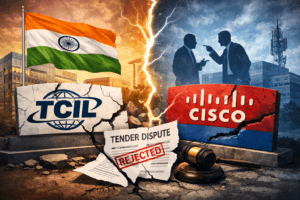
A Strategic Fracture: How a Bidding Dispute Led to Cisco’s Blacklisting by a Key Indian PSU
Decoding the High-Stakes Clash Between TCIL and Cisco Systems
In a move that has sent ripples through India’s public sector and technology procurement landscape, state-owned Telecommunications Consultants India Ltd (TCIL) has imposed a two-year blacklisting on the Indian subsidiary of global networking giant, Cisco Systems. The order, dated January 14, 2026, is not just a contractual penalty; it represents a dramatic breakdown in a long-standing partnership and underscores the increasingly tense dynamics in India’s strategic digital infrastructure projects. At the heart of the conflict is a Karnataka e-governance tender, but the implications extend far beyond a single state project, touching on issues of fair competition, vendor accountability, and national technological sovereignty.
The Crux of the Controversy: KSWAN 3.0 and the Broken Timeline
The dispute originates from a high-value tender floated by the Karnataka Centre for eGovernance for KSWAN 3.0 (Karnataka State Wide Area Network). This project is the backbone for the state’s digital governance, aiming to provide seamless, secure network connectivity to all government offices across Karnataka, coupled with five years of operations and maintenance. For technology integrators, such projects are not just lucrative but strategically important for establishing credibility in India’s booming digital public infrastructure space.
TCIL, a “Mini Ratna” public sector enterprise under the Government of India, positioned itself as a bidder. However, for such tenders, a bidder often requires support from the Original Equipment Manufacturer (OEM)—in this case, Cisco—to validate the proposed solution. This support typically comes in the form of technical compliance documents, product datasheets, and a critical Manufacturer Authorisation Form (MAF). The MAF is a non-negotiable document in public procurement, serving as the OEM’s guarantee that the bidder is an authorized partner and that the proposed equipment and support are genuine.
According to TCIL’s detailed order, the company proactively engaged Cisco as early as December 18, 2025, well ahead of the January 14, 2026, bid deadline. What followed, TCIL alleges, was a pattern of deliberate delays and last-minute obstruction. Despite repeated reminders and a meeting on January 12 where Cisco executives allegedly committed to providing the documents, the crucial paperwork was not furnished. Then, at the eleventh hour, Cisco purportedly introduced a new, unprecedented condition: requiring a formal undertaking to be signed by the Chairman and Managing Director of TCIL—a condition TCIL claims was never part of their prior successful collaborations on major projects like the Indian Coast Guard (ICG) network, the Armed Forces Network (AFNET), or public sector bank projects.
Beyond a Simple Delay: Allegations of “Sabotage” and Anti-Competitive Practice
TCIL’s language in the order is notably severe, elevating the incident from a procedural failure to an act of strategic disruption. The PSU accuses Cisco of:
- Deliberate Non-Responsiveness: Knowingly withholding mandatory documents despite awareness of the deadline.
- Creating Artificial Barriers: Introducing new, extraneous conditions at the final stage to effectively block TCIL’s bid submission.
- “Sabotaging” Fair Competition: Engaging in “unfair, exclusionary and anti-competitive practices” aimed at unlawfully benefiting Cisco’s commercial interests.
This framing is critical. TCIL is implying that Cisco’s actions were designed to weaken a domestic, state-owned competitor in the bidding process, potentially to favor another partner or to position itself differently in the tender. In India’s evolving procurement ethos, which increasingly emphasizes self-reliance (Atmanirbhar Bharat) and fair play for domestic companies, such allegations carry significant weight.
Cisco’s Defense and the Complexity of Vendor-OEM Relationships
In its response, Cisco has taken a measured, principle-based stance, stating it “abides by applicable local laws and regulations” and holds itself to a high standard of business conduct. The company has emphasized its continued engagement with TCIL and its commitment to the Indian market. This suggests Cisco views the blacklisting as a contractual dispute rather than a reflection of its broader market practices.
This conflict highlights the often-opaque and power-imbalanced relationship between global OEMs and local system integrators, especially in government contracts. The integrator (TCIL) relies on the OEM (Cisco) not just for products, but for the timely authorization that legitimizes its bid. This dependency can become a point of leverage. Industry observers note that disagreements over partnership terms, commercial agreements, or even the OEM’s own strategic interests in a particular tender can sometimes manifest in delays or changed conditions at critical moments.
The Broader Implications: A Watershed Moment for Indian Tech Procurement?
The two-year blacklist, while limited to future TCIL tenders and excluding existing projects, is a substantial reputational blow to Cisco in a key market segment. Its impact will be closely watched for several reasons:
- A Signal to Global Vendors: The Indian government and its PSUs are demonstrating a decreased tolerance for perceived high-handedness or unfair practices. This action signals that domestic entities, particularly state-owned ones, will leverage procurement rules to assert their position.
- Accelerating Diversification: This incident may accelerate TCIL’s and other PSUs’ efforts to diversify their technology partnerships, potentially looking more seriously at alternative OEMs, including domestic networking providers or other global players like Nokia, Juniper, or emerging open-source solutions.
- The Geopolitical Undercurrent: While not explicitly stated, the context of India’s push for technological self-reliance and cybersecurity forms a backdrop. Over-reliance on any single foreign OEM for critical state network infrastructure is a point of strategic concern. Disputes like this provide a practical impetus for exploring and developing indigenous capabilities.
- Scrutiny on Procurement Processes: It may lead to calls for more standardized, transparent, and time-bound processes for OEM authorizations in government tenders to prevent last-minute disruptions.
The Path Forward: Negotiation or a New Paradigm?
While the blacklisting order is firm, Cisco’s statement about “continued engagement” leaves the door open for a possible resolution before the two-year period elapses. This could involve negotiations, clarifications, and potentially a revised agreement on partnership terms that satisfies both parties.
However, the genie of distrust is out of the bottle. For TCIL, the path forward likely involves a strategic review of its vendor ecosystem to build greater resilience. For Cisco, it necessitates a delicate balance between maintaining its global standards and adapting to the sensitivities and assertive posture of India’s strategic public sector.
Ultimately, the TCIL-Cisco impasse is more than a corporate dispute. It is a case study in the shifting balance of power in global technology supply chains, the growing assertiveness of India’s public sector in procurement, and the complex dance between collaboration and competition in building the nation’s digital future. The outcome will resonate in boardrooms from Bengaluru to San Jose, influencing how technology giants engage with one of the world’s most critical and fast-growing digital economies.
You must be logged in to post a comment.