
A Nation’s Winter Split: Dense Fog Grips the North as South Enjoys Mild Skies
India is experiencing a stark north-south weather divide this winter, with the northern and central regions, including Delhi, Punjab, Haryana, and Uttar Pradesh, grappling with persistent dense to very dense fog and “very poor” to “severe” air quality, causing significant flight cancellations, train delays, and heightened health risks from a combination of cold temperatures and trapped pollutants. While western Himalayan areas like Jammu & Kashmir receive beneficial snowfall, the southern parts of the country, including Hyderabad and Bengaluru, enjoy mild, sunny, and disruption-free conditions. Although Delhi saw a brief improvement in air quality due to stronger winds, this relief is expected to be temporary, with fog and cold day conditions forecast to continue disrupting daily life and travel across the northern plains.
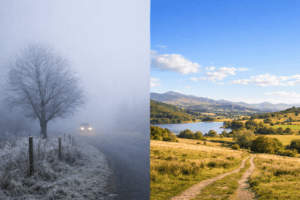
A Nation’s Winter Split: Dense Fog Grips the North as South Enjoys Mild Skies
The winter of 2025 paints a picture of two starkly different Indias. While the northern plains shiver under a persistent blanket of dense fog and grapple with hazardous air, cities across the south experience a relatively mild and sunny season. This dramatic regional divide, shaped by distinct meteorological factors, is disrupting daily life, transportation, and health for millions, even as it offers a period of calm for others.
National Weather Snapshot: A Tale of Two Climates
The India Meteorological Department (IMD) forecasts reveal a clear north-south split. The following table summarizes the current conditions and forecasts across major regions:
| Region | Current Conditions & Forecast | Key Impacts & Temperatures |
| North India (Delhi NCR, Punjab, Haryana, UP) | Dense to Very Dense Fog; Cold Day Conditions | Flight/train disruptions; Poor air quality (AQI 201-400); Temps: 6°C – 22°C |
| Central & Eastern India (Bihar, Jharkhand, Odisha, MP) | Dense Fog; Cold Wave Alerts | Reduced visibility for travel; Health advisories in effect |
| Western Himalayas (J&K, Ladakh, Himachal, Uttarakhand) | Snowfall/Rain; Dense Fog in Valleys | Tourist activity affected; Sub-zero temps in higher reaches |
| South India (Hyderabad, Bengaluru, Chennai) | Mild Winter; Clear to Partly Cloudy Skies | Minimal disruptions; Pleasant conditions; Temps: 14°C – 32°C |
Delhi’s Fleeting Respite in a Foggy Winter
The national capital has become the focal point of this winter’s challenges. After weeks of “very poor” to “severe” air quality, Delhi witnessed a brief but noticeable improvement on December 25th, with the average Air Quality Index (AQI) dropping to around 220-221, placing it in the “poor” category. This shift led the Commission for Air Quality Management (CAQM) to revoke the stringent Stage-IV restrictions of the Graded Response Action Plan (GRAP), which had been in force since December 13th.
This improvement, however, is a fragile victory. Meteorologists attribute it primarily to favorable weather conditions—specifically, surface winds of 15-25 kmph—that helped disperse the accumulated pollutants. Authorities and forecasting systems have unanimously warned that this respite is temporary. With wind speeds expected to decrease, the Air Quality Early Warning System predicts a return to the “very poor” zone in the coming days.
The crisis is far from over. Even on this better day, stark inequalities in air quality persist across the city. While areas like IGI Airport and Lodhi Road recorded “moderate” AQI levels, Anand Vihar remained a pollution hotspot with readings in the “very poor” category (AQI 292-308). Analysis shows that vehicular emissions continue to be the largest single contributor to Delhi’s pollution, accounting for 17.5% of the problem, followed by industrial emissions.
Widespread Disruption: Transport Gridlock and Daily Life
The dense fog enveloping North India is more than just a visual nuisance; it’s a major disruptor of the national infrastructure:
- Aviation Chaos: The Indira Gandhi International Airport (IGIA) in Delhi has faced massive disruptions. On a single day (December 22nd), over 500 flights were delayed and at least 14 were cancelled due to visibility dropping as low as 50-200 meters. The airport has issued advisories urging passengers to check their flight status before heading to the terminals.
- Rail and Road Snarls: The Northern Railways reported delays for over 100 trains, with some running behind schedule by up to five hours. On highways, the near-zero visibility in cities like Agra and Ambala has drastically increased the risk of road accidents, forcing authorities to issue safety advisories for drivers.
Beyond travel, the combination of cold day conditions—where maximum temperatures remain significantly below normal—and polluted fog poses a severe public health challenge, particularly for children, the elderly, and those with pre-existing respiratory conditions.
Beyond the Plains: Snow in the Himalayas and Mild Southern Winters
The weather story extends beyond the plains of North India:
- Western Himalayas: The region has welcomed a fresh spell of snowfall, which coincided with the start of ‘Chillai Kalan’, Kashmir’s 40-day period of harsh winter. This has brought cheer to the tourism sector in destinations like Gulmarg, even as higher reaches like Lahaul & Spiti recorded minimum temperatures as low as -5.7°C. The IMD forecasts more light to moderate rain or snow in Jammu & Kashmir, Himachal Pradesh, and Uttarakhand towards the end of December.
- Southern Contrast: Meanwhile, major cities in South India are experiencing a gentle winter. Hyderabad forecasts clear skies with temperatures between 14°C and 30°C, while Bengaluru expects misty mornings with a comfortable range of 16°C to 28°C. This mild weather presents no significant warnings or disruptions, highlighting the seasonal contrast within the country.
Outlook and Guidance: Navigating the End of December
The IMD’s forecast suggests that the challenging conditions in the north will persist. Dense to very dense fog is likely to continue in pulses across Punjab, Haryana, Delhi, and Uttar Pradesh until at least December 31st. Isolated cold wave conditions are also predicted for parts of Northwest and Central India.
For residents and travelers in affected zones, staying informed and taking precautions is essential:
- Travel: Check flight and train status frequently before departure.
- Health: Limit prolonged outdoor exposure during morning fog, especially for vulnerable groups. The fog traps pollutants, exacerbating respiratory issues.
- On the Road: Use fog lights, maintain low speed, and avoid unnecessary travel during peak fog hours (late night and early morning).
In conclusion, India’s winter landscape is defined by a deep climatic divide. As northern India battles a multi-front challenge of fog, cold, and pollution—with only fleeting relief—the south enjoys stable and pleasant weather. This period underscores the complex interplay of regional meteorology and urban environmental management, where a change in wind direction can bring a day of clearer skies, but lasting solutions require sustained effort.
You must be logged in to post a comment.