
A Divine Blanket: Kedarnath and Badrinath Awaken to the Season’s First Snow
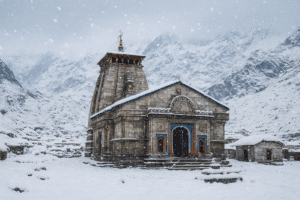
On the morning of November 5, 2025, the revered Himalayan shrines of Kedarnath and Badrinath in Uttarakhand were transformed by the season’s first significant snowfall, an event that began around 3 am and lasted for four to five hours, blanketing the temple complexes, walking paths, and surrounding peaks in white and causing a sharp dip in temperature; despite the wintry conditions, officials confirmed that all roads to Badrinath remain open and safe for the over 1,000 pilgrims currently visiting, with the shrine scheduled to remain accessible until its planned winter closure on November 25, all while being maintained under the vigilant watch of the Indo-Tibetan Border Police and temple committee members.
A Divine Blanket: Kedarnath and Badrinath Awaken to the Season’s First Snow
The celestial abodes of Kedarnath and Badrinath, nestled in the formidable Garhwal Himalayas, have officially received winter’s calling card. In the pre-dawn hours of a late autumn Wednesday, the season’s first snowfall descended upon the sacred valleys, transforming the rugged landscapes into a pristine, ethereal white. This isn’t merely a meteorological event; it is a profound seasonal shift that marks the countdown to the winter closure of the temples, a period of deep spiritual significance and logistical precision.
For the over 1,000 pilgrims who found themselves in Badrinath as the snow began to fall at 3 AM, it was a moment of divine serendipity. The sharp, biting cold that followed the snowfall was a small price to pay for a vision that most devotees only see in pictures: the iconic Badrinath temple, dedicated to Lord Vishnu, set against a backdrop of freshly powdered peaks.
“It was freezing cold, but we couldn’t resist stepping out to see the snow-covered temple,” shared Shubankar Chatterjee, a 45-year-old pilgrim from Kolkata, his words capturing the irresistible pull of the sacred spectacle. His experience underscores a unique truth about the Char Dham pilgrimage: the journey is as much about embracing the elements as it is about seeking darshan.
The Mechanics of a Mountain Metamorphosis
According to Sunil Purohit, the Executive Officer of the Badrinath Nagar Panchayat, the snowfall was a sustained, four-hour event that lasted until around 7 AM. This wasn’t a fleeting flurry but a substantial spell that deposited thick layers of snow on the temple complex, the surrounding hills, and the approaching roads. The event triggered a sharp dip in temperatures, a definitive heralding of the winter season in the high Himalayas.
The phenomenon was not isolated to Badrinath. A similar transformation occurred at the Kedarnath Dham, the shrine of Lord Shiva, located at an even higher altitude. Here, the temple complex, the arduous walking paths trodden by millions of devotees, and the formidable mountain peaks that stand as silent sentinels were all uniformly blanketed. Hemant Dwivedi, President of the Badrinath-Kedarnath Temple Committee (BKTC), noted that while the snow in Badrinath lasted four to five hours, Kedarnath experienced a slightly longer spell, hinting at the more severe winter conditions that typically envelop the Shiva shrine.
The snowfall’s reach extended down to areas like Garud Chatti, a stop on the trekking route to Badrinath, indicating a significant drop in the snowline. This is a critical data point for the temple committees and disaster management authorities, helping them model the progression of the coming winter.
Beyond the Beauty: The Invisible Machinery of Safety and Sanctity
The breathtaking beauty of the snow-clad temples belies a massive, coordinated effort to ensure that the final weeks of the pilgrimage season proceed without incident. A key reassurance came directly from BKTC President Hemant Dwivedi, who affirmed that all roads leading to Badrinath remain open and that pilgrims can continue to visit the shrine safely until its scheduled closure on November 25.
This assurance is backed by the vigilant presence of the Indo-Tibetan Border Police (ITBP) and members of the BKTC. As temple priest Anand Shukla of the Kedar Sabha confirmed, the shrine remains under constant watch even after the portals are sealed for winter. This year-round vigil is crucial, protecting the sanctums from both the extreme elements and any potential security threats in the sensitive border region.
The management of the pilgrimage in these transitional weeks is a masterclass in logistics. It involves:
- Continuous Weather Monitoring: Authorities rely on advanced meteorological data to anticipate heavy snowfall that could trap pilgrims.
- Road Maintenance: Ensuring the motorable roads to Badrinath remain clear is a daily challenge, requiring constant readiness for snow-clearing operations.
- Crowd Management: With a finite number of days left before closure, there is often a final rush of devotees, necessitating careful management to prevent overcrowding at the temples and along the routes.
The Deeper Meaning: Snow as a Symbol of Cyclical Renewal
In the Hindu spiritual consciousness, the Himalayas are not just a mountain range; they are ‘Devalaya’—the abode of the gods. The snowfall, therefore, is perceived as more than a weather event. It is a symbolic curtain being drawn, a period of rest for the deities and the mountains themselves. The closure of the temples for winter is not an end, but a necessary pause, a time for the divine energy to rejuvenate before the cycle begins anew with the grand reopening in spring (usually April or May).
The snow acts as a purifying agent, cleansing the landscape and the spiritual atmosphere. For the devout, the sight of the temples under a fresh blanket of snow reinforces the belief in the enduring, timeless nature of their faith—a faith that remains steadfast even as the temperatures plummet and the paths become impassable.
A Message for Prospective Pilgrims
For anyone considering a last-minute pilgrimage to Badrinath before November 25, the current conditions offer a unique, if challenging, opportunity. The landscape is at its most dramatic, and the experience of witnessing the first snow is spiritually enriching. However, this comes with non-negotiable caveats:
- Prepare for Extreme Cold: The dip in temperature is severe. Pilgrims must carry heavy woolens, layered clothing, thermals, and appropriate footwear.
- Stay Informed: Continuously check for updates from the Uttarakhand Tourism Department and the BKTC regarding road conditions and weather forecasts.
- Prioritize Health: The cold can exacerbate altitude-related issues. Acclimatization, hydration, and awareness of one’s physical limits are paramount.
As the sun rises over the newly whitened peaks of Kedarnath and Badrinath, it illuminates a landscape in transition. The season’s first snowfall is a powerful reminder of nature’s dominion and the resilient human spirit that journeys through it in search of the divine. It marks the beginning of the mountains’ silent, snowy vigil, a restful slumber that will last until the spring sun once again awakens the sacred paths for another season of faith.
You must be logged in to post a comment.