
‘A Big Piece of Land’: When an Ambassador’s Theology Redraws the Middle East Map
U.S. Ambassador to Israel Mike Huckabee sparked widespread condemnation from Arab and Muslim nations after stating in an interview with Tucker Carlson that Israel has a biblical right to a vast portion of the Middle East, including territories that would encompass modern-day Israel, Palestine, Jordan, Lebanon, Syria, and parts of Iraq and Saudi Arabia—a claim based on God’s promise to Abraham in the Book of Genesis. While Huckabee added that Israel is not currently seeking expansion, his remarks were denounced by Egypt, the Organisation of Islamic Cooperation, and the Arab League as extremist, provocative, and a violation of international law, creating a stark contradiction with President Donald Trump’s stated policy against West Bank annexation and raising fears that such theological rhetoric undermines the two-state solution and inflames regional tensions at a time of ongoing conflict in Gaza and instability in Syria and Lebanon.
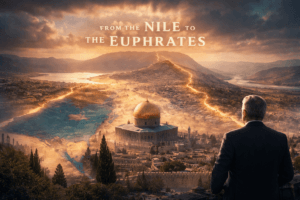
‘A Big Piece of Land’: When an Ambassador’s Theology Redraws the Middle East Map
In an interview with a conservative commentator, the U.S. Ambassador to Israel suggested the Jewish state has a divine right to territory spanning from the Nile to the Euphrates. The reaction from the Arab world was swift and furious.
It was a quiet Friday when Mike Huckabee, the U.S. Ambassador to Israel, sat down with former Fox News host Tucker Carlson for a wide-ranging interview. By Saturday evening, his words had ignited a firestorm across the Middle East, forcing foreign ministries from Cairo to Riyadh to issue statements and raising urgent questions about the line between personal belief and diplomatic protocol.
The source of the controversy wasn’t a new peace plan or a military maneuver, but a conversation about an ancient text. Carlson, known for his provocative interviews, steered the discussion toward the Book of Genesis. He posited that according to the Bible, God’s promise to Abraham and his descendants granted them land from the “River of Egypt” to the Euphrates—a vast territory that, on a modern map, would encompass not only Israel but also Palestine, Jordan, Lebanon, Syria, and significant portions of Iraq and Saudi Arabia.
“It would be fine if they took it all,” Huckabee responded, in a moment that was quickly clipped and shared millions of times across global social media.
While Huckabee added a qualifier—noting that Israel is currently focused on securing the land it “legitimately holds” rather than expansion—the damage was done. To millions across the Arab and Muslim world, the ambassador of the world’s sole superpower had just endorsed the erasure of their nations.
The Man Behind the Microphone
To understand the weight of Huckabee’s words, one must understand the man who spoke them. Long before his current diplomatic post, Mike Huckabee was a Baptist pastor, a governor of Arkansas, and a two-time candidate for the Republican presidential nomination. His worldview is unapologetically shaped by his evangelical Christian faith, which for many adherents includes a strong theological and political support for the state of Israel.
This is not a new stance for Huckabee. He has been a staunch opponent of a two-state solution for decades, viewing the concept of a Palestinian state on land he considers biblically Jewish as a theological and political impossibility. In previous interviews, he has famously questioned the very existence of a distinct Palestinian people, referring to them as Arab populations living in what he calls “Judea and Samaria,” the biblical terms for the West Bank.
This ideological framework makes his ambassadorship a unique and often unsettling case for diplomats in the region. While most ambassadors operate within the framework of international law, UN resolutions, and long-standing U.S. policy, Huckabee operates with a compass that often points to the verses of the Old Testament.
From Ancient Scripture to Modern Cartography
The concept of “Greater Israel” (Eretz Yisrael Hashlema) is not new. It has been a fringe but persistent element in Zionist thought for a century, and it remains a core tenet for far-right religious and nationalist parties within Israel’s own political system. These groups hold annual marches and conferences advocating for the annexation of the West Bank and the rebuilding of a Jewish temple on the Temple Mount/Haram al-Sharif in Jerusalem.
However, for these ideas to be voiced, even rhetorically, by the official representative of the United States government, is a seismic shift.
Huckabee’s phrasing—”Not sure we’d go that far. I mean, it would be a big piece of land”—was interpreted not as a disavowal of the idea, but as a tacit acknowledgment of its scale. It suggested that the only obstacle to realizing this biblical prophecy was its impractical size, not its inherent illegality under international law.
This distinction is critical. International law, as codified in the Fourth Geneva Convention, explicitly forbids an occupying power from transferring its population into occupied territory. The International Court of Justice and the UN Security Council have repeatedly affirmed that the settlements Israel has built in the West Bank and East Jerusalem since 1967 are illegal. Huckabee’s comments, in one fell swoop, appeared to dismiss the entire body of post-World War II international consensus on the acquisition of territory by force.
The Fury of the Neighbors
The reaction from the region was not merely diplomatic displeasure; it was a cry of alarm.
Egypt, the first Arab nation to make peace with Israel in 1979, a peace that saw it regain the Sinai Peninsula, was among the first to respond. The Egyptian foreign ministry did not mince words, calling the remarks a “blatant violation of international law” and asserting that “Israel has no sovereignty over the occupied Palestinian territory or other Arab lands.” For Cairo, which has positioned itself as a mediator in the Israeli-Palestinian conflict, such statements undermine the very foundation of regional stability.
The 57-nation Organisation of Islamic Cooperation (OIC) described the comments as “extremist and provocative,” while the Cairo-based League of Arab States warned that such rhetoric serves only to “inflame sentiments and stir religious and national emotions.”
The subtext of their concern is profound. For decades, the core of the Arab-Israeli conflict has been framed as a political dispute over territory: land for peace. Huckabee’s comments reframe it as an unending religious war. If the ultimate goal is not a secure Israel within recognized borders, but a “Greater Israel” promised by God, then what is there to negotiate? What compromise can be offered to a claim that is presented as divine and absolute?
A Dissonance with Washington?
Perhaps the most confusing element of the saga is the apparent disconnect between Ambassador Huckabee’s personal theology and the stated policy of the administration he serves.
President Donald Trump, who appointed Huckabee, has in recent months made statements that seem to directly contradict his ambassador’s vision. He has explicitly stated that he would not allow Israel to annex the West Bank, offering what he called “strong assurances” that he would block any such move. This stance is a dramatic shift from his first term, when his administration brokered the Abraham Accords and unveiled a peace plan that would have allowed Israel to annex parts of the West Bank.
This creates a bizarre diplomatic paradox. Is the U.S. ambassador in Jerusalem telling regional leaders one thing, while the President says another? Or is Huckabee’s interview a trial balloon, a way to test the waters of public opinion for a more hardline approach in the future?
Political analysts in Jerusalem suggest the former is more likely. Huckabee is not a career diplomat; he is a political appointee and an ideological fellow traveler of Israel’s most right-wing factions. His comments, they argue, are a reflection of his core beliefs, not a shift in White House strategy. Yet, as the U.S. ambassador, his words carry the weight of the American flag, and no amount of clarifying statements from Washington can fully erase the image of the U.S. envoy endorsing a biblical claim to the lands of its allies.
The View from the Ground
While diplomats spar over semantics, the reality on the ground in the West Bank continues to shift. Even without a formal declaration of annexation, the territory is being steadily absorbed into Israel through the expansion of settlements. In recent months, the government has approved thousands of new housing units in settlements, retroactively legalized wildcat outposts, and transferred significant civilian authority in the West Bank from the military to a ministry overseen by a pro-settler politician.
For Palestinians living in places like Hebron or the Jordan Valley, Huckabee’s words are not an abstract theological debate. They are a confirmation of their deepest fears. They see a U.S. ambassador who does not believe in their right to exist as a nation, representing a president who, despite his recent assurances, has moved the U.S. embassy to Jerusalem, recognized Israeli sovereignty over the Golan Heights, and brokered normalization deals that sidelined their cause.
A shopkeeper in Ramallah, when shown the interview, shook his head in weary resignation. “He says it’s fine if they take it all,” he said. “But we are here. We have been here. Our grandparents are buried here. Who will tell the ambassador that his Bible is not our deed?”
The Shifting Sands of Conflict
The context of Huckabee’s interview is critical. It comes at a time of unprecedented upheaval. The war in Gaza, which began after the Hamas attacks on October 7, 2023, has devastated the coastal enclave and left the region on a knife’s edge. While a ceasefire currently holds, Israel maintains control of more than half of Gaza’s territory.
Further north, the Syrian landscape has been transformed. Following the ouster of President Bashar al-Assad in late 2024, Israel moved troops into the demilitarized buffer zone on the Golan Heights—a move it insisted was temporary and defensive, but which nevertheless constitutes a seizure of Syrian land.
In Lebanon, Israeli forces continue to occupy five strategic hilltop posts after its brief but intense war with Hezbollah in 2024.
In this volatile environment, where borders are already being contested with force, a U.S. ambassador suggesting that Israel has a God-given right to even more land is seen by many as pouring gasoline on a smoldering fire. It lends legitimacy to the most maximalist elements in Israeli politics and provides a powerful recruitment tool for militant groups across the region who argue that the West’s ultimate goal is their subjugation.
Conclusion: A Dangerous Gap
The Huckabee controversy reveals a dangerous and growing gap in the American approach to the Middle East. On one side is the pragmatic world of statecraft, international law, and the messy business of ceasefires and two-state solutions. On the other is a theological worldview where modern political conflicts are seen through the lens of biblical prophecy.
By allowing an ambassador to voice the latter without immediate and forceful repudiation, the United States risks being seen not as a mediator, but as a party to a religious crusade. The outrage from Egypt, Jordan, and the Arab League is not just about a single interview. It is about the fear that the United States, the indispensable nation in the region, is no longer interested in making peace between peoples, but in fulfilling a prophecy that leaves no room for the people who are already there.
As the sun set over Jerusalem on Saturday, the official response from the U.S. State Department remained silent. But the words of its ambassador in Jerusalem had already traveled far beyond the studio, echoing through the ancient streets of Cairo, Damascus, and Baghdad—places he had just suggested, in a conversation about a 3,000-year-old text, could legitimately be “taken.”
You must be logged in to post a comment.